
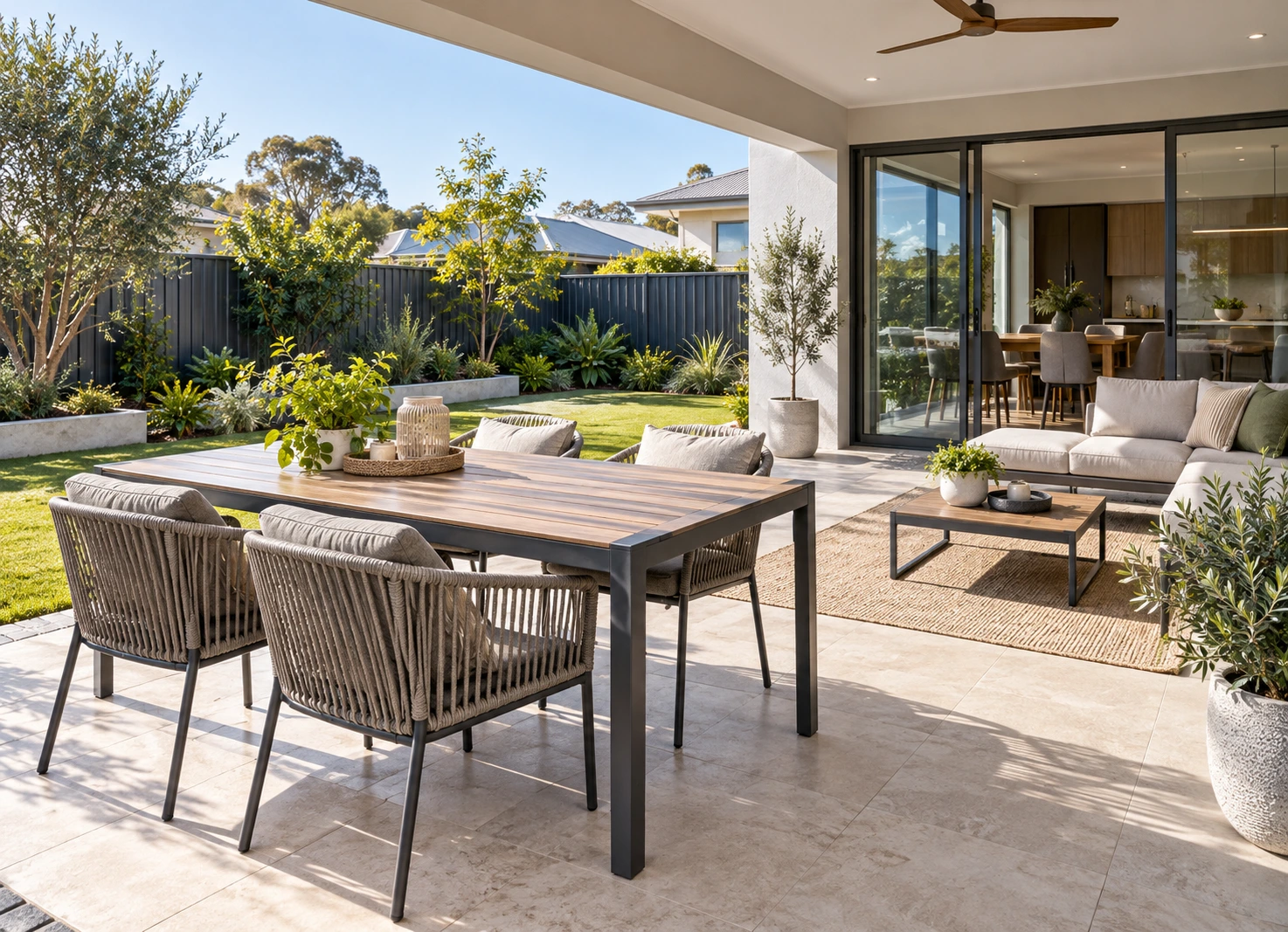
In Perth, the patio, alfresco or balcony is often the most used part of the home for much of the year. It is where you have breakfast in the sun, entertain friends on a summer evening, and relax at the end of the day. Choosing the right outdoor furniture makes that space work, but only if it fits.
A setting that looks perfect online can feel cramped once it arrives or leaves a large alfresco looking empty. This guide explains how to measure outdoor furniture step by step, so you can choose pieces that fit your space, leave room to move and suit the way you live outdoors.
Why Measuring First Matters
- Comfort. Enough space lets people sit, stand and move without bumping into furniture.
- Flow. Clear walkways to doors, steps, the barbecue and the garden keep the area easy to use.
- Proportion. Furniture that is the right size for the space looks balanced, not crowded or sparse.
- Delivery. Measuring access points helps make sure your furniture can get to where it is going.
What You Will Need
- A tape measure, ideally 5 metres or longer
- A notepad or phone to sketch and record measurements
- Masking tape, string or flattened cardboard boxes to mark out furniture
- A helper to hold the other end of the tape
Step-by-Step: How to Measure for Outdoor Furniture
Step 1: Measure the Total Area
Measure the full length and width of the outdoor area. For an alfresco or patio under a roof, measure the covered section separately, as this is where most furniture will sit. For irregular shapes, break the area into rectangles and measure each one.
Step 2: Mark Fixed Features
Note anything that cannot move, and its position:
- Doors, including sliding door tracks and the swing of any hinged doors
- Steps, posts, columns and roof supports
- Garden beds, pool fences and gates
- Built-in barbecues, outdoor kitchens and benches
- Windows, taps, power points and outdoor lights
- Air conditioning units and downpipes
Step 3: Plan Your Walkways
Decide where people will walk, such as from the house to the yard, to the barbecue or to the pool. Keep these paths clear. As a general guide, allow about 90 cm for main walkways and at least 60 cm for secondary paths.
Step 4: Divide the Space into Zones
Think about how you want to use space. Common zones include dining, lounging, cooking, and relaxing. Larger areas can fit more than one zone, while a balcony may suit just one.
Step 5: Check the Clearances for Each Zone
Use the clearance guide below to work out how much space each piece of furniture needs, not just its own size.
Step 6: Mark It Out
Use masking tape, string or cardboard cut to size to mark the footprint of the furniture you are considering. Walk around it, pull out imaginary chairs, and check that doors are still open freely. This simple step helps you picture the final layout before you buy it.
Step 7: Measure Delivery Access
Measure the width and height of gates, side paths, doorways, hallways and lifts the furniture will need to pass through. Check stairs and tight corners too, especially for balconies and apartments.
Outdoor Furniture Clearance Guide
| Furniture or area | Recommended clearance | Why it matters |
|---|---|---|
| Behind dining chairs | About 75 to 90 cm from the table edge | Lets people pull out chairs and sit down comfortably |
| Main walkways | About 90 cm | Allows people to walk past easily, even carrying plates |
| Secondary paths | At least 60 cm | Enough room for one person to move through |
| Between a sofa and coffee table | About 45 cm | Easy to reach drinks without feeling cramped |
| Around a sun lounger or daybed | About 60 cm on at least one side | Room to get on and off and to walk past |
| Around a hanging egg chair | Allow extra space beyond the stand for gentle swinging | Stops the chair bumping walls, posts or plants |
| Near barbecues and heaters | Follow the manufacturer's recommended clearance | Reduces fire risk and keeps the area safe |
These are general guides. Larger or busier households may want a little more room.
How Much Space Do You Need for Each Type of Setting?
Outdoor Dining Settings
Allow about 60 cm of table length for each person, so diners have enough elbow room. Then add the chair clearance on every side where people will sit. Once you know how much seating space is available, explore our outdoor dining sets to compare different seating capacities and table arrangements.
| Setting size | Typical table shape | Space needed for comfortable use (approx.) |
|---|---|---|
| 4-seater | Square or small rectangle | About 2.6 x 2.6 m |
| 6-seater | Rectangle, around 180 x 90 cm | About 3.6 x 2.7 m |
| 8-seater | Long rectangle, around 220 x 100 cm | About 4.0 x 2.8 m |
If you prefer to choose a table separately, browse our outdoor dining tables and compare their dimensions with your available patio or alfresco space.
These figures include about 90 cm clearance around the table. Check the exact dimensions of your chosen setting and adjust. An extendable outdoor dining table is a great option if you entertain larger groups only some of the time.
Outdoor Lounge and Sofa Settings
Measure the full footprint of the sofa, including any corner or chaise section, then add space for a coffee table and walkways. L-shaped and modular lounges work well in corners and against walls, leaving the centre of the space open. Explore our range of outdoor sofas to compare seating configurations and find a suitable option for your available space.
Lounge Dining Sets
Lounge dining sets combine sofa seating with a dining-height or lounge-height table. They save space by doing two jobs in one, which makes them popular for medium-sized alfresco areas. Check the seat depth and the space needed to slide in and out of the bench or sofa.
Daybeds and Sun Loungers
Sun loungers are long, so measure the full reclined length. Daybeds need space on at least one side to get on and off. Position them where they catch the sun, or the shade, depending on how you like to relax. Before choosing, compare the full dimensions of our daybeds and sun loungers to ensure there is enough room for reclining and moving around the furniture.
Egg Swing Chairs
Check the footprint of the stand and the height of the frame, especially under a patio roof or pergola. Leave space around the chair so it can swing gently without hitting walls, posts, or other furniture. Explore our egg swing chairs and check each model’s stand dimensions and recommended clearance before purchasing.
Measuring Balconies and Small Spaces
- Measure the usable floor space, not just the overall balcony size, as railings, planters and air conditioning units take up room.
- Check the door swing and sliding door track, so furniture does not block access.
- Choose compact or foldable pieces, such as a bistro setting, a single egg chair, or a small lounge.
- Think vertically, with wall planters and slim side tables to save floor space.
- Check strata or building rules for weight limits and items allowed on balconies.
Perth Conditions to Consider
- Sun and shade. Note where the sun falls at different times of day, and plan seating where it is comfortable in summer.
- Wind. Exposed balconies and coastal areas may need heavier furniture or pieces that can be secured.
- Covered or uncovered. Furniture under the roof last longer. If your area is uncovered, choose weather-resistant materials such as aluminium or PE wicker, and use covers.
- Cushion storage. Plan space to store cushions in bad weather.
Choosing the right material is just as important as finding the right dimensions. Our aluminium vs rattan outdoor furniture guide compares their construction, maintenance requirements and suitability for different Perth outdoor spaces.
Common Measuring Mistakes
- Measuring only the furniture, not the space needed around it
- Forgetting doors and paths, which can leave furniture blocking access
- Ignoring delivery access, so large pieces cannot reach the backyard or balcony
- Buying too large for the space, which makes the area feel cramped
- Buying too small for a large alfresco, which can make it feel empty
Conclusion
Knowing how to measure outdoor furniture takes the guesswork out of buying. Measure the full area, mark fixed features, plan your walkways and allow enough clearance for each zone. Mark the layout on the ground, check your delivery access, and you will be ready to choose outdoor furniture that fits your space and your lifestyle.
Measure Once. Enjoy the Years.
Frequently Asked Questions
How much space do you need around an outdoor dining table?
Allow about 75 to 90 cm from the edge of the table on each side where chairs will be used. This gives enough room to pull out chairs and walk behind seated guests.
What size outdoor setting fits a small alfresco?
A 4-seater dining setting, a compact lounge dining set or a small sofa with a coffee table often works well. Measure the space and allow room for walkways before choosing.
How do I measure a balcony for outdoor furniture?
Measure the usable floor space, excluding railings, planters and air conditioning units, and check the door swing or sliding door track. Choose compact pieces that leave a clear path to the door.
How much space does an egg swing chair need?
Allow for the full footprint of the stand plus extra room so the chair can swing gently. Check the frame height too, especially under a patio roof.
Should I measure doorways before buying outdoor furniture?
Yes. Measure gates, side paths, doorways, hallways and lifts the furniture will pass through, so it can be delivered to your outdoor area without any problems.
Find Outdoor Furniture That Fits at Perth Furniture & Fun
Once you have your measurements, browse our outdoor settings, outdoor sofas, dining tables and chairs, daybeds and egg swing chairs. Check the product dimensions against your plan or bring your measurements to our showroom at Unit 4, 164 Great Eastern Highway, Midvale, and our team can help you choose the right size.
Browse Outdoor Furniture
Leave a Comment
Your email address will not be published. Required fields are marked *